Walk into three tailoring studios, and you may hear three answers to one question. The first calls it bespoke, the second calls it made-to-measure, and the third promises something custom. Prices differ, processes differ, and the labels sound nearly identical. Confusing? Absolutely, and that confusion costs buyers real money when a label promises more than the process delivers.
This guide separates marketing language from method, so you can read any tailoring offer with confidence. You will learn what each term usually means, where they overlap, and which option fits your wardrobe, budget, and expectations before you book a fitting or place a final order.
What Is a Bespoke Suit and Why Does the Label Matter
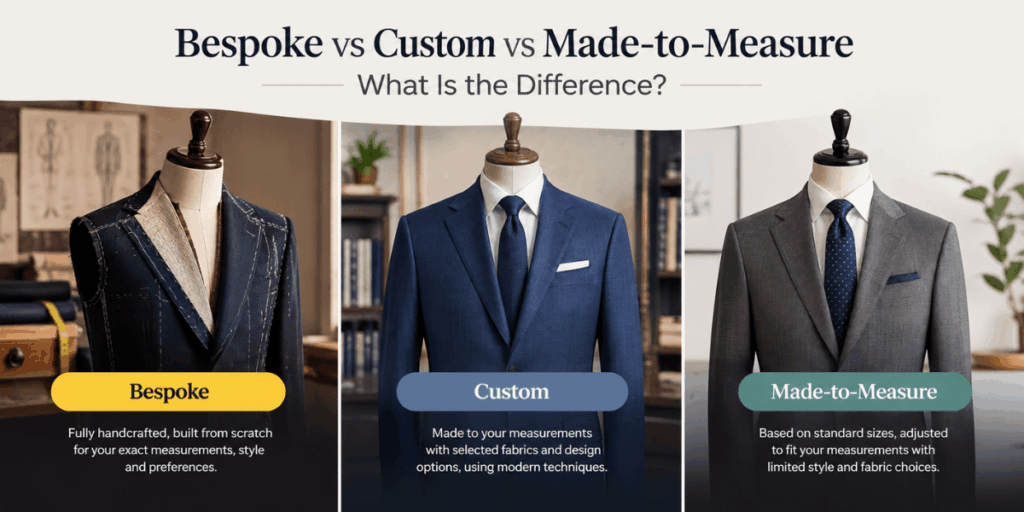
A bespoke suit begins with an individual, not a standard size chart. The term bespoke comes from bespeak, a word that by the late 16th century was associated with arranging or ordering goods. Over time, it became closely linked with clothing made specifically for the person who commissions it. In modern tailoring, bespoke generally refers to a suit created around an individual client’s measurements, preferences, and proportions.
A cutter drafts a unique paper pattern for the wearer rather than simply altering a standard pattern to fit. This gives the tailor greater scope to account for body shape, refine the silhouette, and incorporate personal choices in the garment’s construction and finish.
What Is a Made-to-Measure Suit and How Does It Work
A made-to-measure suit offers a middle ground between ready-to-wear clothing and fully bespoke tailoring. Instead of starting with a completely new pattern, the tailor works from an existing design and adjusts it to the client’s measurements. This approach retains some standardization, making production more efficient and generally less expensive than drafting an individual pattern from scratch.
The process typically involves measuring the client, selecting a suitable base pattern, and modifying key dimensions to achieve a closer fit. Depending on the tailor’s service, clients may also choose details such as jacket length, sleeve length, lapel style, lining, and fabric. The extent of these options varies, so it is worth confirming which adjustments and design choices are available before ordering.
What Is a Custom Suit and How Is It Made
A custom suit is designed around an individual’s preferences rather than selected straight off the rack. The term custom is broad and can cover different levels of personalization, from adjusting an existing pattern to creating a garment with more extensive input from the client. It also overlaps with bespoke, which dictionaries define as custom-made. However, the exact meaning of these terms can vary between tailors, so the label alone does not reveal how a suit will be constructed.
The process usually begins with a consultation to discuss the desired fit, fabric, style, and intended use of the suit. The tailor then takes measurements and determines how the garment will be patterned and constructed. Depending on the service, the client may be able to choose details such as lapels, buttons, pockets, lining, and trouser cuts. Fittings and subsequent adjustments help refine the garment before completion, although the number of fittings and the extent of alterations depend on the tailor’s process.
Custom vs Bespoke vs Made-to-Measure: Side-by-Side Comparison
Although these terms are sometimes used interchangeably, they can describe different approaches to suit construction, personalization, and fit. Comparing the three options side by side makes it easier to understand what each service may include, how the tailoring process differs, and which details are worth confirming before placing an order.
Where Custom Suits Fit In
Custom suits offer design and fit flexibility, but the process varies by tailor. Understanding how each service works helps you compare custom, bespoke, and made-to-measure options before you decide.
Why Labels Overlap
Handmade finishing can appear on factory-made suits, and fit and quality are semi-independent, so neither price nor handwork alone reveals the method. These factors blur the line, so debates over bespoke vs custom rarely settle on vocabulary alone. Judge a tailor by the process on offer rather than the name on the label.
Questions to Ask Before You Order
Four direct questions expose the real method behind any label:
- Is the pattern drafted for me, or is it adjusted from a base pattern?
- How many fittings are included?
- Which parts are sewn by hand and which by machine?
- Will you store my pattern for future suits?
Made-to-Measure vs Bespoke on Budget
Made-to-measure is often less expensive than bespoke because it uses an existing pattern, although prices vary by tailor and service. It may suit buyers who want a personalized fit without paying for extensive individual pattern development. Bespoke earns its premium when fit precision and design freedom matter most.
Bring your budget and questions to British Custom Tailors, and we will explain what each tailoring level adds to your fit and help you choose from our custom-made suits with your budget in mind.
Choosing the Right Option
The best option depends on your budget, your fit goals, and how many fittings you can attend. Use the three profiles below to match your priorities.
Who Should Choose Bespoke
Bespoke suits suit buyers who want extensive control over design and fit, including those whose proportions may be difficult to accommodate with standard patterns. In a custom vs bespoke comparison, this tier is most likely to deliver a pattern made for one person alone.
- You value fit precision above price.
- You plan to reorder from a stored pattern
- You enjoy shaping every design detail
Who Should Choose Made-to-Measure?
Made-to-measure suits suit professionals who want a more personalized fit than standard ready-to-wear clothing can offer, without requiring a new pattern to be drafted from scratch. It also works well for a first tailored purchase, because the process introduces measuring, fit discussions, and style choices at a gentler price point.
Who Should Choose Custom
Custom suits suit buyers who value a personalized design process and want to understand how the garment will be patterned, constructed, and fitted before ordering. The label alone proves little, so the answers to the four questions show how closely an offer matches your expectations.
Frequently Asked Questions
1. Is Bespoke Always Better Than Made-to-Measure?
Not always. Bespoke offers the most control over fit, but a well-run made-to-measure service fits many standard builds comfortably. Match the option to your build, wardrobe needs, and budget.
2. Can I Start with Made-to-Measure and Try Bespoke Later?
Yes, buyers often start with made-to-measure, learn what a good fit feels like, and step up to bespoke when they want more control.
3. Does a Higher Price Guarantee a Better Suit?
No, price reflects the work involved, but only the method confirms quality. Review the process, the fittings, and the tailor’s track record.
4. What Should I Bring to a First Fitting?
Bring photos of styles you like, plus the shirt and shoes you plan to wear. Clear references help any tailor interpret your preferences.
5. Is Custom a Standardized Term?
Not in everyday use, since sellers apply it to different methods. Ask how the pattern is made and request the answer in writing.
Conclusion
Bespoke, made-to-measure, and custom describe different tailoring approaches, and the label alone rarely tells the full story. Bespoke offers the deepest personalization, made-to-measure offers a dependable middle ground, and custom depends entirely on the maker. Use the table and the four questions to compare offers on method, then choose the option that matches your build and budget. Keep notes from every consultation, because side-by-side answers make the right choice much easier to see. A clear process always beats a clever label.
Experience a clear process in person at British Custom Tailors, where we explain each step of our luxury custom suits and adjust the fit with you until it feels right!