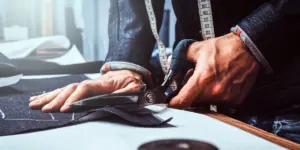

Suits don’t announce their decline with a single dramatic rip or tear. The change is slower: a shoulder seam pulling a touch tighter, a sleeve creeping half an inch shorter, a waistband that used to sit easy now leaving a mark. Most men blame the suit long before they consider the fit, even though a proper adjustment can often bring the whole garment back to life. That’s especially true for quality pieces, and it is worth altering an expensive suit rather than replacing it the moment the fit starts to slip.
This guide points out the clearest warning signs, explains what a skilled tailor can actually fix, and helps you decide when an adjustment is worth the visit.
How to Know If Your Suit Needs Alterations?
Certain fit problems announce themselves the moment you put a jacket on, while others creep in slowly over months of wear.
Shoulders That Pinch or Sag
Shoulders are the foundation of any jacket, and problems here show up fast. Divots at the top of the sleeve mean the jacket is too tight, while a collapsed look with extra fabric rolling over your arm means it’s too big. Either way, the rest of the suit will never sit right until this is corrected.
Sleeves That Cover Your Knuckles
Your jacket sleeve should stop right at the wrist bone, leaving a small strip of shirt cuff visible. Sleeves that reach past your knuckles look borrowed, not tailored, and they hide one of the small details that signal genuine care in dressing. A tailor can usually shorten them within a day.
A Jacket That Pulls at the Button
Fasten your jacket and watch what happens across the chest and stomach. Fabric that strains, wrinkles, or forms an X shape around the button means the jacket is too tight for your frame right now. This is one of the clearest signals that alterations, or a new size, are overdue.
Trousers That Bunch at the Shoe
Trousers should break gently over the top of your shoe without pooling fabric at the ankle. Excess length bunching near the shoe looks sloppy and can fray with regular wear. A quick hem fixes this in most cases and costs very little compared with the rest of a suit.
A Collar Gap at the Back of the Neck
Turn sideways in a mirror and check where your jacket collar meets your shirt collar. A visible gap between the two usually points to a jacket cut for a different posture or shoulder slope. Left alone, this small gap pulls attention away from an otherwise sharp outfit.
Trousers That Sag in the Seat
Excess fabric bunching or drooping across the seat signals trousers that are too loose through the hips. This makes the whole silhouette look untidy, even when the jacket fits well. A tailor can take in the seat and thighs to restore a cleaner line.
A Jacket That Rides Up When You Sit
A blazer that climbs toward your neck when you sit down is usually too short or too tight through the body. This makes you feel restricted and looks awkward in meetings or at dinner. Lengthening the body slightly, where the fabric allows, corrects the problem.
What Parts of a Suit Can Be Altered?
Not every part of a jacket or trouser leg responds to a tailor’s needle in the same way, and knowing the difference saves time at your first fitting.
- The waist and midsection: A tailor can take in or let out the waist along the side seams, making it one of the simplest and most common suit alterations.
- The trouser length: Hems are quick and affordable, with the tailor measuring your preferred break against your shoes.
- Sleeve length: Sleeves can typically be shortened or lengthened by about an inch without affecting the rest of the jacket.
- The jacket length: Changing the overall length is far more involved and affects the pockets, vents, and the garment’s balance.
- The shoulders: Shoulder adjustments sit at the difficult end of suit alterations, since the sleeve has to be detached and reset.
- The shirt collar and chest: Chest suppression sharpens the silhouette, while collar adjustments correct gaps caused by posture or shoulder slope.
When Should You Alter a Suit?
Most men wait far too long to address a fitness problem, even though timing matters more than people realise. Body shape changes gradually, so a suit that fit perfectly two years ago can feel different today without warning. Booking a fitting a few weeks ahead of an important date gives the tailor room to work without rushing the finish.
Basic alterations like hemming or a minor sleeve adjustment can often be turned around in a few days. Still, anything involving the waist, shoulders, or overall structure needs more lead time. Leaving these changes until the last minute limits what a tailor can realistically fix, and rushed work rarely holds up as well as a job done with room to spare.
Waiting until the week of an event is how most fit problems turn into last-minute panic. We offer rental tuxedos in Wellesley, MA, with expert alterations. Book early and walk in looking like the date was never in question!
How Much Can a Suit Be Altered?
The limit varies by tailor and by region, but a general guide helps set expectations before your first fitting.
| Alteration | Difficulty | Typical Limit |
| Trouser hem | Easy | Fabric-dependent, no fixed cap |
| Waist take-in | Moderate | Up to two sizes |
| Sleeve length | Moderate | Up to 1 inch |
| Jacket length | Difficult | Minimal, tailor-dependent |
| Shoulder adjustment | Very difficult | Minimal, if possible at all |
Frequently Asked Questions
How long do suit alterations usually take?
Simple jobs like hemming take a couple of days. Complex work involving the shoulders can take two to three weeks.
Is altering an expensive suit worth it?
In most cases, yes. A well-made jacket made from quality cloth holds its shape and responds better to alterations than a cheap, fused one. Tailors generally suggest comparing the alteration cost to the price of a similar replacement, and if the work comes in under half that figure, the suit is worth saving.
What parts of a suit can be altered?
The waist, trouser length, and sleeves are the easiest to adjust. Jacket length and shoulders are far more limited.
Can a suit be altered more than once?
Yes, though each round works with whatever fabric remains along the seams. Tailors keep notes to plan future adjustments.
When should you alter a suit?
Whenever the fit no longer matches your current shape, ideally a few weeks before any important date. Waiting too long limits what a tailor can realistically fix in time.
Should I get a suit altered before or after dry cleaning?
Cleaning first is generally better, since it gives the tailor a clearer view of the true fit.
Conclusion
A suit rarely fails all at once. It gradually slips out of shape, one loose seam or tight seam at a time, until the fit no longer matches the person wearing it. Paying attention to shoulders, sleeves, and the way fabric sits across your chest gives you a clear read on the fit before it becomes obvious to everyone else in the room. A skilled tailor can restore that fit, turning a suit you had written off into one you reach for again.
A suit that no longer sits right isn’t a reason to give up on it. We are ready to give that suit a second life. Our expert tailors in Wellesley, MA, can assess the fit and rework it to bring it back into shape. Book a fitting today!