A black-tie invitation arrives and the questions begin. Do you need a tuxedo? Can a dark suit carry you through the evening? Is there room for personal style within such a structured dress code? The answer is yes, but only once you understand what the dress code is genuinely asking of you.
Black-tie dressing is not about rigid rules for their own sake. It is about presenting yourself with intention and respect for the occasion. Get the components right, commit to proper fit, and the dress code stops feeling like a restriction and starts working in your favor. This guide walks you through every element, clearly and directly.
What Is the Black-Tie Dress Code for Men?
The black-tie dress code men are expected to follow traces its origins to 19th-century Britain. According to Henry Poole and Co., the dinner jacket emerged as a less formal alternative to white tie, eventually becoming the global standard for formal evening occasions.
The dinner jacket has a precise origin. In 1865, the Prince of Wales, the future King Edward VII, asked his tailor Henry Poole to shorten the traditional tailcoat into something suitable for relaxed evening dinners at Sandringham. Poole delivered it in celestial blue, and no earlier record of a comparable garment exists in his ledgers dating to 1846, nor in those of any other tailor of the period. The British dinner jacket was born from that single commission.
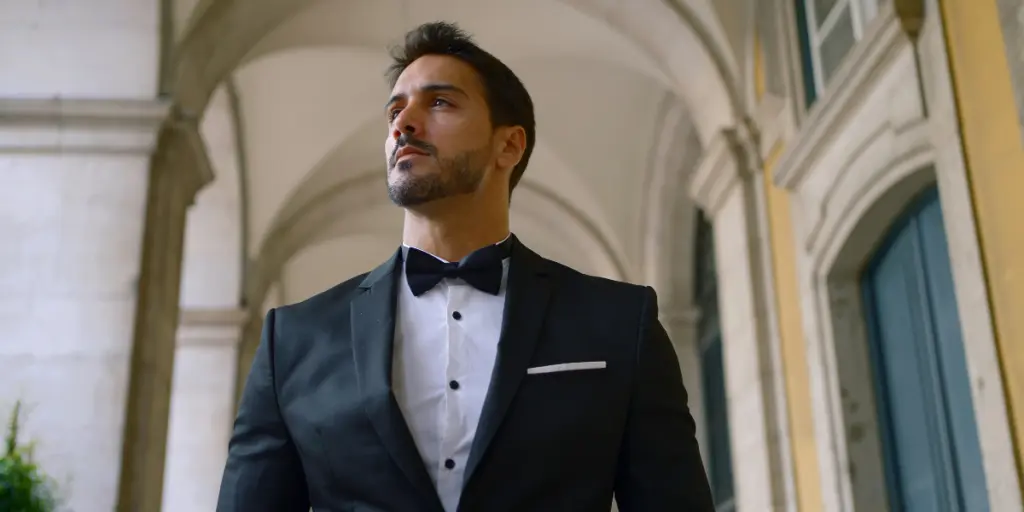
Today, it sits one level below white tie. It requires a dinner jacket, matching trousers, a white dress shirt, and a self-tied black silk bow tie. It is not an invitation to wear a dark suit. When an invitation reads “black tie,” a tuxedo is the expectation, without exception.
How to Dress for a Black-Tie Event with Confidence
Understanding what to wear to a black-tie event means knowing what each piece does and how the components work together.
1. The Tuxedo Jacket
The dinner jacket is the centerpiece of the ensemble. Worn in black or midnight navy, it features lapels finished in satin or grosgrain, with either a shawl collar or a peaked lapel, which visually distinguishes it from a standard suit jacket.
Fit is critical. The shoulder seam must sit at the precise edge of the shoulder. The chest lies flat without pulling at the button. The jacket hem falls just below the hip bone, and the sleeves reveal no more than half an inch of shirt cuff.
2. Tuxedo Trousers
Tuxedo trousers carry a single satin stripe down each outer leg, a detail that also signals that a belt should never be worn with them. Braces are correct if extra support is needed. Trousers sit at the natural waist and break cleanly at the shoe with no bunching at the ankle.
3. The Dress Shirt
A white dress shirt is non-negotiable. It should feature a pleated or plain bib front and fasten with shirt studs rather than standard buttons. A spread collar creates a cleaner, more modern line than the wing collar. The fabric should be crisp cotton poplin or fine cotton twill: structured and breathable.
4. Neckwear
A self-tied black silk bow tie is the only appropriate neckwear. Pre-tied or clip-on versions are not acceptable at this level of formality. The hand-tied imperfection signals authenticity and effort. For a personal touch, a midnight navy or deep burgundy silk bow tie is a widely accepted variation, provided the rest of the outfit remains traditionally correct.
5. Shoes and Socks
Black patent leather Oxford shoes are considered the classic standard. Black cap-toe Oxfords in polished calf leather are equally accepted. The leather must be mirror-polished before the event. Black silk socks, long enough to fully cover the ankle when seated, complete the look. Any visible gap at the ankle is a detail that does not go unnoticed.
6. Accessories
Every accessory must serve the ensemble, not pull it in a different direction. A white linen pocket square, understated silver or gold cufflinks, and a slim dress watch are the correct finishing touches. A black cummerbund or a low-cut single-breasted waistcoat covers the trouser waistband when the jacket is open. Restraint here is not a limitation; it is part of the elegance itself.
Decoding Every Variation: Your Tuxedo Dress Code Guide
Not every black-tie invitation carries the same expectation. This tuxedo dress code guide will help you decode the wording before you dress.
| Dress Code | What It Signals | What to Wear |
| Black Tie | Full formal evening dress required | Tuxedo with a self-tied black silk bow tie |
| Black Tie Optional | Tuxedo preferred; suit accepted | Tuxedo or tailored charcoal or navy suit |
| Black Tie Creative | Tuxedo required; expression welcomed | Tuxedo with expressive accessories or color |
| Black Tie Invited | Tuxedo encouraged, not enforced | Tuxedo or very formal dark suit |
| White Tie | Highest formality, above black tie | Tailcoat, white waistcoat, white bow tie |
When in doubt, dress up rather than down. It is always the more respectful choice.
Why Fit Defines the Outcome of Formal Attire for Men
No detail in formal attire for men matters more than fit. A well-fitted mid-range tuxedo consistently outperforms an expensive one worn without tailoring. A peer-reviewed study by researchers at the University of Manchester, published in the Journal of Consumer Behavior, found that clothing fit is the most important consideration during a garment appraisal process, consistently prioritized above all other purchase factors. The study drew on 400 UK respondents, making its findings directly relevant to British dressing standards and expectations.
The most common fit errors to watch for:
- Shoulder seams drifting off the edge of the shoulder: the most visible and most frequent black-tie fit mistake
- Chest pulling open at the lapel: a sign the jacket is too tight across the torso
- Trousers bunching at the ankle: a clear sign the hem needs shortening
- A shirt collar disappearing behind the jacket: this usually means the jacket collar sits too high
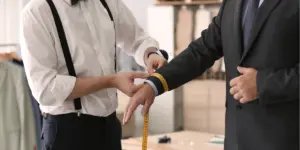
Each of these is correctable with professional tailoring. If your tuxedo needs adjustment, book an alteration at least two weeks before the event to allow time for a final fitting.
The right tuxedo does not just fit your body, it fits the moment. We bring master-level craftsmanship and a deeply personal fitting experience to every client. Explore our premium tuxedo rentals and walk into your next black-tie event looking exactly as you should. Claim Your Fitting Appointment.
Men’s Formal Wear Tips for a Polished Result
These men’s formal wear tips will help you move beyond simply meeting the standard to presenting something genuinely considered.
1. Choose the Right Fabric
Wool barathea and wool crepe are the benchmark fabrics for black-tie formalwear. Both hold their shape through long evenings and drape cleanly under artificial lighting. The Woolmark Company notes that Merino wool remains the preferred suiting fiber among Savile Row tailors for its natural drape, moisture management, and ability to hold its structure through extended wear. These are qualities that make it especially suited to formal evening garments.
2. Consider Midnight Navy
Midnight navy reads darker than black under most event lighting and carries a visual richness that makes it a compelling alternative. It is fully accepted within the dress code and tends to be more flattering across a broader range of skin tones. A study published in Scientific Reports confirmed that fabric color appearance shifts measurably under artificial indoor lighting, with deeply dyed fabrics performing differently under incandescent and low-color-temperature lighting typical of formal evening venues than under natural daylight.
3. Wear the Outfit Before the Event
Wear the complete ensemble at least once before the occasion. Sit, walk, and reach across a surface. What feels comfortable while standing often reveals its limits after an hour at a dinner table. This single step eliminates most avoidable problems.
4. Groom to the Same Standard
A well-constructed tuxedo paired with poor grooming creates an immediate visual contradiction. Hair, shaving, skincare, and fragrance all contribute to the impression you make, and each deserves the same level of attention as the garment itself.
5. Apply the Rule of Restraint
If removing an accessory does not make the outfit feel incomplete, remove it. Fewer, better-chosen pieces always read more confidently than multiple competing details.
Frequently Asked Questions
Are dark suits acceptable at black-tie events?
Only if the invitation says “black tie optional.” For a standard black-tie dress code, a tuxedo is the expectation. Arriving in a suit signals a misreading of the occasion.
What colors are accepted for a black-tie tuxedo?
Black and midnight navy are the two recognized options. White dinner jackets work only for warm-weather settings and must be paired with black trousers.
Is a self-tied bow tie strictly required?
Yes. A self-tied black silk bow tie is the appropriate neckwear at this level of formality. A pre-tied version and a long tie both fall outside the dress code.
How early should I prepare my black-tie outfit?
Begin at least three to four weeks before the event. This allows time for fittings, alterations, and a final review without pressure.
Is renting a tuxedo acceptable?
Entirely acceptable, provided the garment is professionally fitted to your measurements before the event. A well-fitted rental always outperforms a poorly fitted owned piece.
Conclusion
Black-tie dressing rewards preparation and precision above all else. Every element has a defined purpose, and every detail contributes to the impression you make. Understand the components, commit to a proper fit, choose quality fabrics, and exercise restraint with your accessories. The result is an ensemble that conveys confidence and genuine respect for the occasion.
Exceptional clothing is not bought, it is built, one precise measurement at a time. We craft bespoke custom suits and formalwear that move with you, reflect your character, and hold their standard long after the evening ends. Start Your Bespoke Journey Today.